
New Travis Trailers For Sale
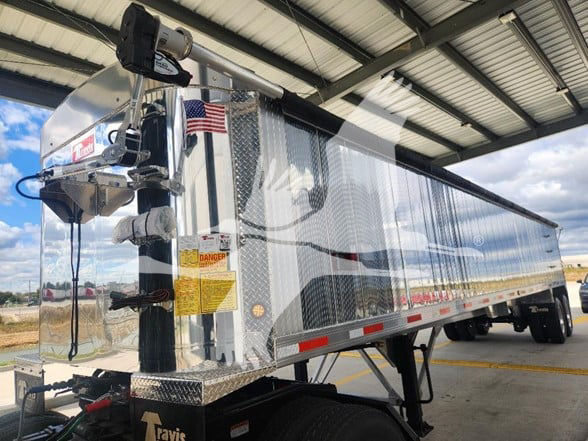
Shop new Travis trailers for sale, including aluminum end dump trailers with air ride, lift axles, grain doors, tarps, and liner options.
Learn more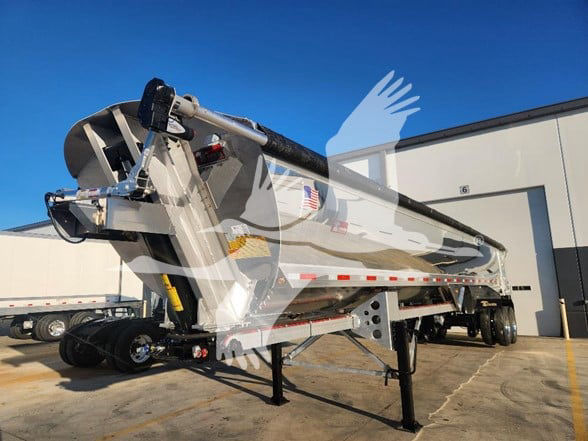
Have new travis trailer to sell? List it here to reach thousands of buyers.
About New Travis Trailers
Body design and specification details make a real difference in day-to-day performance. Aluminum construction helps maximize legal payload and resists corrosion, which matters for operators running in wet, coastal, or fertilizer-heavy environments. Half-round bodies are popular for clean discharge and reduced material hang-up, while options like interior liners add protection when hauling abrasive loads. Sidewall height, door style, and tarp system should match the material stream. A 24-inch grain door or full rear grain-coal door can improve unloading control, and an electric tarp is close to standard for buyers focused on safety, speed, and load containment.
Suspension and axle layout also deserve close attention. Air ride suspension is common on new Travis dump trailers because it helps protect the trailer structure, improves ride quality, and can reduce load shock on rough roads or jobsite entrances. A front axle lift is a valuable spec for operations that run empty miles between loads, since it can help reduce tire scrub and cut operating costs when conditions allow. Buyers should also look at tire and wheel package choices, kingpin setting, frame design, hoist compatibility, and overall dump geometry. Tandem axle layouts with 11R22.5 tires are widely used because they balance capacity, serviceability, and parts availability.
For buyers comparing new Travis trailers, the real question is how closely the trailer is matched to the work. Aggregate fleets may prioritize a durable liner, stable dump characteristics, and quick-cleaning body shape. Agricultural operators may focus more on grain door configuration, cubic capacity, and corrosion resistance. Asphalt and paving support work can call for body dimensions and tarp setups that speed turnaround and protect load temperature. Travis has long been associated with aluminum dump trailer design, and that reputation matters to buyers who want a trailer that is light, straightforward to maintain, and well understood in the resale market.
Frequently Asked Questions
What are new Travis trailers most commonly used for?
New Travis trailers are most commonly used as aluminum end dump trailers for bulk materials such as sand, gravel, crushed stone, asphalt millings, grain, coal, fertilizer, and similar commodities. Their lightweight construction makes them especially attractive in payload-sensitive operations where legal weight limits directly affect revenue per trip. The exact body and door configuration should be matched to the material being hauled and the unloading conditions at the jobsite or plant.
Why do many buyers choose an aluminum Travis end dump trailer?
Many buyers choose an aluminum Travis end dump trailer because aluminum helps reduce tare weight and improve corrosion resistance. Lower empty weight can translate into more payload capacity, which is a major advantage in aggregate and agricultural hauling. Aluminum also tends to hold value well when the trailer has been maintained properly, which is one reason Travis trailers are often considered by fleets focused on lifecycle cost and resale.
What specs matter most when comparing new Travis dump trailers?
The most important specs usually include body length, sidewall height, body style such as half-round, axle configuration, suspension type, lift axle setup, door style, tarp system, tire size, and whether the trailer includes an interior liner. These choices affect payload, unloading behavior, durability, and maintenance cost. Buyers should also verify how the trailer's kingpin setting, overall height, and dump angle fit their tractors, routes, and loading facilities.
Is air ride suspension a good choice on a new Travis trailer?
Air ride suspension is a strong choice for many dump trailer applications because it improves ride quality and helps reduce shock transfer into the trailer structure. That can be beneficial on rough roads, uneven jobsites, and mixed-use routes. Air ride is also commonly paired with lift axle configurations, which can help reduce tire wear and improve efficiency when the trailer is running empty or lightly loaded, subject to local regulations and operating practices.