
New Log Trailers For Sale
Shop new log trailers built for timber hauling, with bolsters, grapple-ready options, air ride suspensions, and heavy-duty axle ratings.
Learn moreBrowse Log Trailers by Make
Have new log trailer to sell? List it here to reach thousands of buyers.
About New Log Trailers
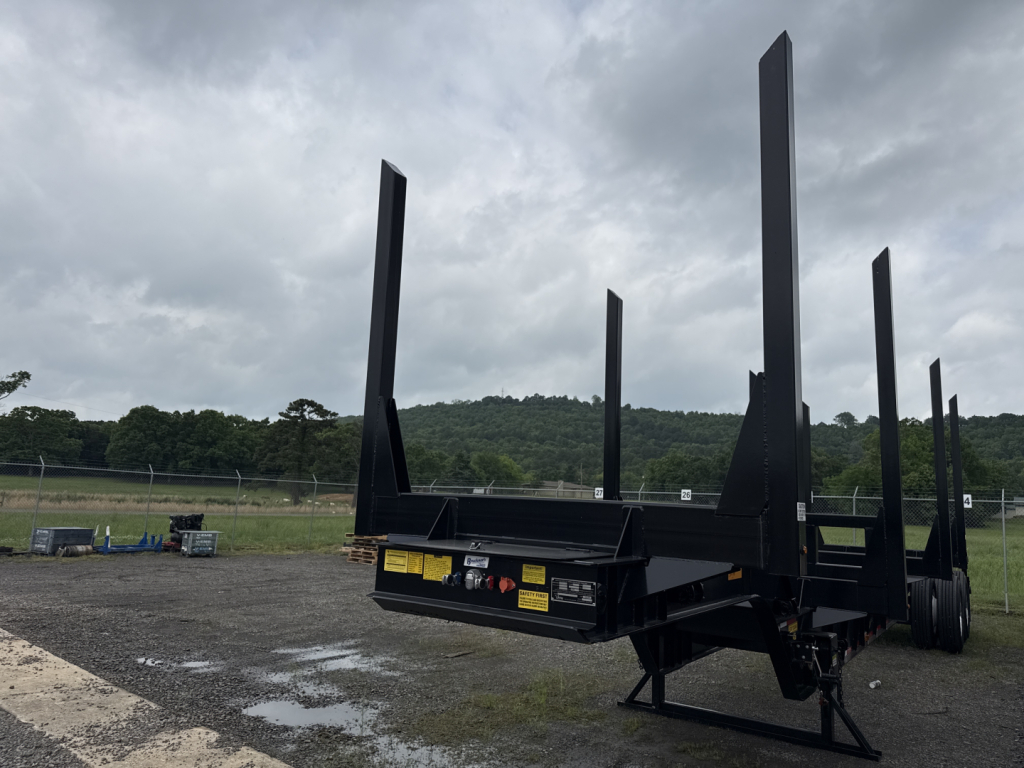
Weight matters in this category. A lightweight steel or mixed-material log trailer can improve legal payload without giving up the structural strength needed for forestry service. Common specs include tandem axle layouts, 25,000 lb axles, air ride or other heavy-duty suspensions, 11R24.5 tires, and drum brakes, though exact requirements depend on state bridge laws, terrain, and the type of wood being hauled. Buyers should also look closely at the frame design, crossmember construction, landing gear setup, and kingpin area, especially if the trailer will see uneven loading conditions or frequent off-pavement operation. Single-point suspensions and drop-center frames are often selected for a balance of stability, ride quality, and load containment.
The load handling package is what separates one log trailer from another. Bolsters, grapple bars, chains or straps, winch systems, and stake configuration need to match the way the wood is loaded and unloaded. A trailer set up for grapple loading may need specific bar placement and clear deck access, while plantation hauling often prioritizes fast cycle times and consistent load placement. Some new log trailers also come with load cells and onboard electronics, which help operators track weight more accurately and reduce the risk of overloading at the landing or mill. Wheel choice, tire spec, and brake package also matter because these trailers often run in demanding conditions where traction, stopping performance, and serviceability are critical.
A good new log trailer should fit the haul, not just the price point. Pay attention to bolster height, stake strength, axle spread, suspension design, and how the trailer is optioned for regional logging practices. In areas with rough access roads, structural durability and suspension travel may matter more than cosmetic features. In high-volume plantation work, tare weight and loading efficiency usually drive the buying decision. The best choice is a trailer built to carry the wood you move most often, stay compliant on your routes, and hold up under repeated loading, unloading, and off-road stress.
Frequently Asked Questions
What should I look for first when buying a new log trailer?
Start with the trailer’s intended wood type, average log length, and the roads it will travel. Trailer length, bolster count, axle rating, and suspension type should match your hauling application before you compare cosmetic options. A lighter trailer can improve payload, but it still needs enough structural strength for off-road loading, uneven terrain, and repeated heavy use. Buyers should also confirm brake type, tire size, landing gear design, and any grapple-ready or load scale features that support their operation.
What is a common configuration for a new log trailer?
A common new log trailer setup includes a tandem axle configuration, heavy-duty steel construction, bolsters with upright stakes, 11R24.5 tires, and either air ride or another forestry-capable suspension. Many units in timber service are built around a 40-foot length, often with four bolsters for plantation or pulpwood hauling. Axle ratings around 25,000 lb per axle are typical in many applications, but the right spec depends on local weight laws, terrain, and expected payload.
Are air ride suspensions a good choice for log trailers?
Air ride can be a strong choice when ride quality, load stability, and reduced shock transfer are priorities. It can help protect the trailer structure and improve handling on mixed road surfaces, especially when the trailer spends time on both highways and rough access roads. That said, suspension choice should be based on service conditions, maintenance preference, and the type of timber work being done. Some buyers prioritize simplicity and durability in severe off-road use, while others prefer air ride for its performance and versatility.
How do bolsters and stake spacing affect log trailer performance?
Bolsters and stake spacing determine how well the trailer supports different log lengths and controls the load during transport. Proper spacing helps distribute weight more evenly across the trailer and axles, improves containment, and reduces shifting risk. If the trailer will haul plantation wood, pulpwood, or mixed lengths, the bolster layout needs to fit that range of material. A mismatched setup can slow loading, reduce payload efficiency, and create unnecessary stress on the trailer frame and running gear.
Do load cells and onboard electronics matter on a log trailer?
They can be very valuable for operations that need better weight control at the landing, in the yard, or before heading to the mill. Load cells and onboard electronics help the operator estimate payload more accurately and reduce the chance of running overweight. That can save time, improve compliance, and support more consistent loading practices across drivers and shifts. For fleets focused on production and legal payload management, this option can add real day-to-day value.