
Refrigerated Trucks For Sale in Pennsylvania
Browse refrigerated trucks for sale in Pennsylvania. Compare reefer bodies, liftgates, diesel engines, and cold-chain delivery specs.
Learn more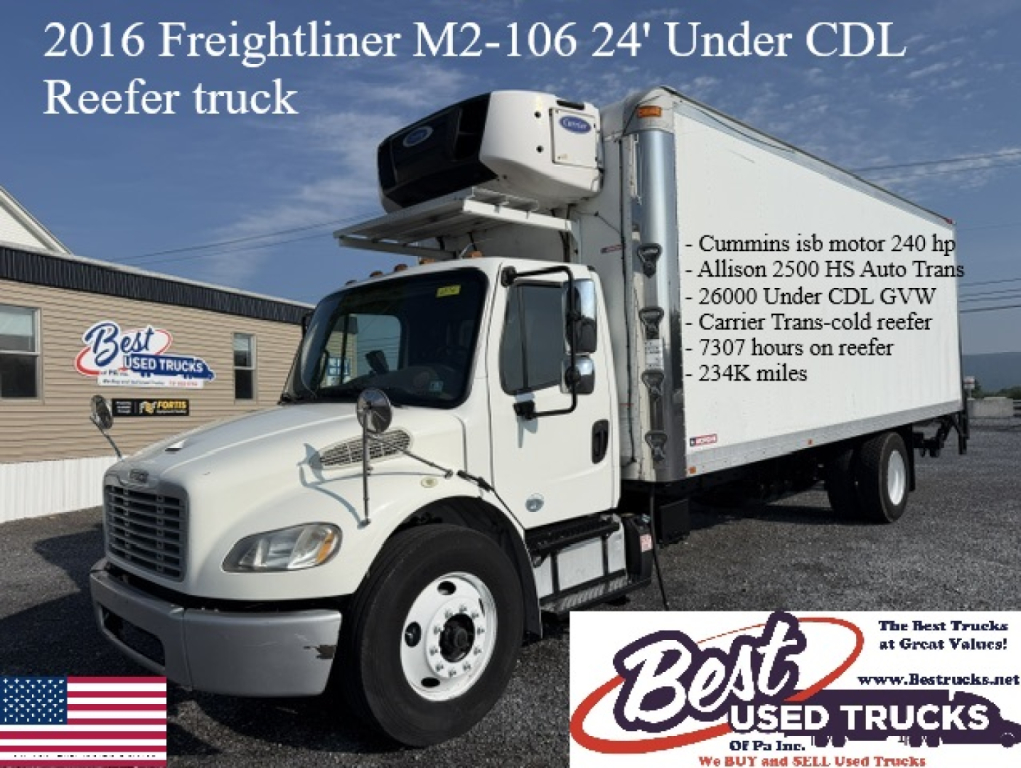
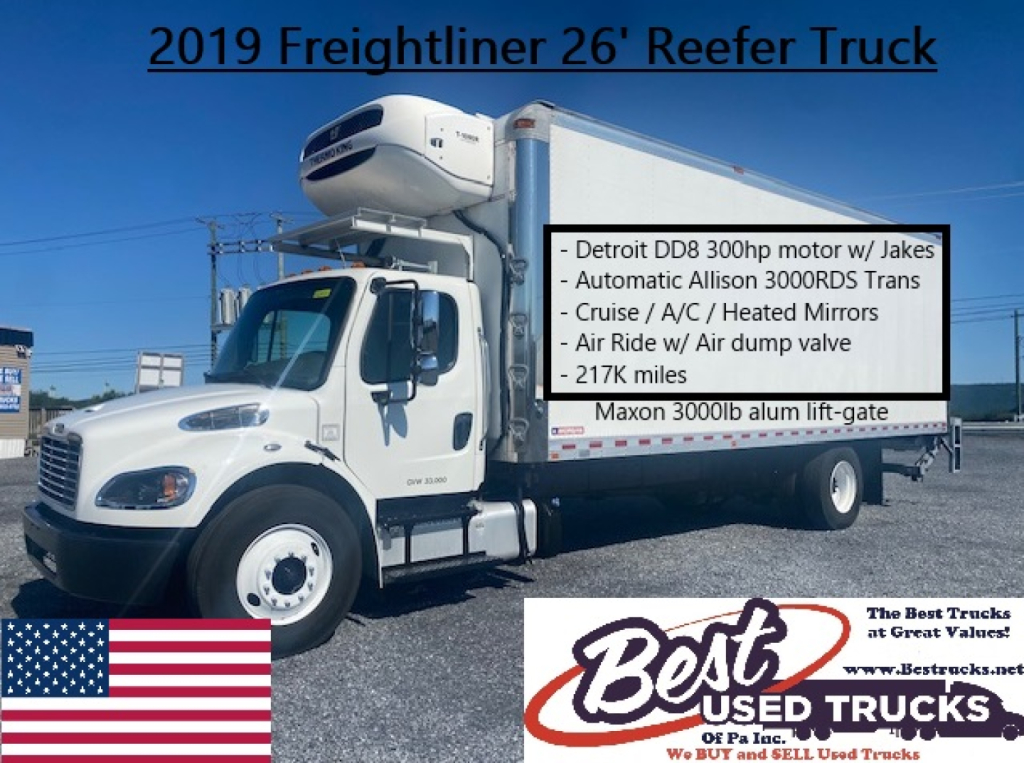
Have refrigerated truck to sell? List it here to reach thousands of buyers.
About Refrigerated Trucks in Pennsylvania
Body and refrigeration specs usually drive the buying decision before the chassis does. Common box lengths run from around 16 to 26 feet, with 24-foot and 26-foot bodies frequently used for higher-cube city and regional delivery. Important reefer-body details include insulation thickness, ducted or chute-style air delivery, aluminum or hardwood floors, drain setup, interior lighting, scuff liners, curbside doors, and the condition of door seals. If frozen or multi-temp freight is part of the job, pay close attention to partition walls, bulkheads, return-air management, and how well the body holds temperature during frequent door openings. Reefer unit brand, hours, service history, and pull-down performance matter every bit as much as truck mileage.
On the chassis side, many refrigerated trucks are spec'd in Class 6 and Class 7 ranges, often around 26,000 to 33,000 GVWR, with single-axle 4x2 layouts, automatic transmissions, and diesel engines sized for stop-and-go delivery. In Pennsylvania, buyers often value automatic transmissions, air ride suspension, heated mirrors, and strong liftgate capacity because routes can include city congestion, warehouse yards, winter weather, and uneven loading conditions. A 26,000 GVWR non-CDL reefer truck can make sense for certain operations, but a 33,000 GVWR truck may offer more payload margin once the reefer body, refrigeration unit, and liftgate are factored in. Rear axle ratio, wheelbase, and door configuration also affect maneuverability in older urban corridors and tight customer sites.
A good refrigerated truck should be evaluated as a cold-chain system, not just a cab and box. Buyers should compare reefer hours against maintenance records, confirm operating temperature range, inspect evaporator and condenser condition, check for floor damage from pallet traffic, and verify the liftgate matches the freight being handled. For Pennsylvania operations, corrosion, underbody condition, and insulation integrity are worth a close look because road salt, humidity, and year-round use can shorten body life if maintenance slips. The best fit is the truck that balances cube, payload, temperature performance, service access, and route efficiency for the freight you actually move.
Frequently Asked Questions
What should I check first when buying a used refrigerated truck?
Start with the reefer unit, body condition, and temperature performance before focusing on cosmetic items. Reefer hours, service records, pull-down time, door seal condition, insulation integrity, evaporator cleanliness, and floor wear tell you more about the truck's real value than paint or trim. A refrigerated truck is only as good as its ability to maintain product temperature under load and during repeated door openings.
What GVWR is common for refrigerated straight trucks?
Many refrigerated straight trucks fall in the 26,000 to 33,000 GVWR range. A 26,000 GVWR truck may appeal to operators trying to stay in a non-CDL class, while 33,000 GVWR units often provide more usable payload once the insulated body, refrigeration system, and liftgate are included. The right rating depends on product weight, route density, and how often the truck runs at full cube.
How important are reefer unit hours on a refrigerated truck?
Reefer unit hours are a major buying factor because they reflect actual use of the refrigeration system, which is separate from engine mileage. A unit with high hours is not automatically a bad choice if it has strong maintenance history, clean operation, and good temperature control, but hours should always be considered alongside compressor condition, leak history, service intervals, and real-world cooling performance.
Are liftgates common on refrigerated trucks?
Yes, liftgates are very common because many reefer deliveries involve palletized freight going to locations without loading docks. The right liftgate capacity depends on the heaviest pallet or cart handled on the route, and buyers should inspect platform size, corrosion, hydraulic operation, and cycle response. A mismatched or worn liftgate can slow deliveries and create safety issues even if the truck itself is sound.
What matters most for refrigerated trucks used in Pennsylvania?
For Pennsylvania service, buyers should pay close attention to winter reliability, corrosion, and maneuverability. Heated mirrors, automatic transmissions, strong heater and defroster performance, and good traction-related specs help in cold-weather operation, while underbody rust and body corrosion should be checked carefully because of road salt exposure. If the route includes Philadelphia, Pittsburgh, or older borough streets, wheelbase, door swing, and curbside access also become important.