
Rears Truck Parts For Sale
Browse rears truck parts including rear axles, carriers, hubs, and housings. Compare ratios, capacities, and fitment for your truck.
Learn more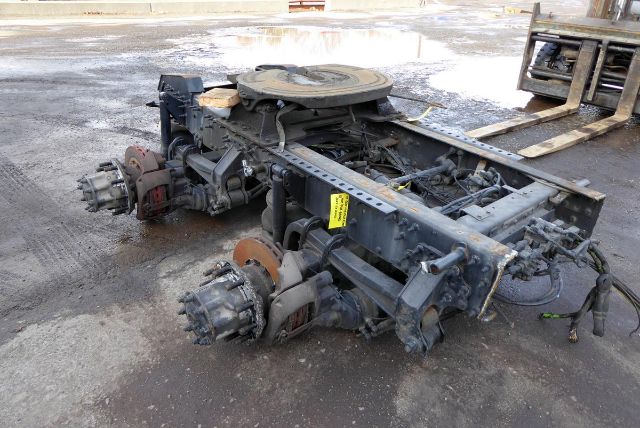
Have rears truck part to sell? List it here to reach thousands of buyers.
About Rears Truck Parts
The most important decision is usually application. A linehaul tractor may need a highway-friendly ratio for fuel economy and lower cruise RPM, while vocational trucks often run deeper ratios to improve startability, grade performance, and low-speed pulling power. Capacity also matters. Rear assemblies are commonly matched by gross axle weight rating, wheel-end type, and brake configuration, with drum and air disc setups requiring different supporting parts. On tandem units, power divider design, inter-axle differential configuration, and matching front and rear ratios are critical. If you are buying a complete rear end, confirm track width, spring pad spacing, suspension mounts, ABS provisions, and whether the axle includes hubs, brakes, shafts, and carrier.
Condition should be evaluated beyond the housing exterior. On used rears, buyers should look for backlash issues, chipped gear teeth, metal in the oil, damaged splines, spun bearings, cracked housings, and heat discoloration around wheel ends. Brake spider condition, hub face wear, seal surfaces, and axle flange integrity also deserve attention. If the part is being used to get a truck back on the road quickly, an assembled takeout can reduce downtime. If the goal is a long-term repair, buyers often compare the value of a bare housing, a replacement carrier, or a complete ratio-matched assembly against the labor required to rebuild the original unit.
Rear truck parts are used across highway tractors, dump trucks, day cabs, refuse units, mixers, and other heavy-duty applications, so exact fitment always comes before price alone. Good listings usually identify axle family, ratio, spline count, brake type, and any included wheel-end components. Matching those details to the truck’s VIN, axle tag, and current suspension setup is the fastest way to narrow the field and avoid compatibility problems. For many buyers, the right rear assembly is the one that balances gearing, load rating, and installation time while keeping the truck’s driveline and brake system in spec.
Frequently Asked Questions
What does “rears” usually mean in truck parts listings?
In most truck parts listings, “rears” refers to rear axle assemblies and related rear-end components. That can include a complete drive axle, differential carrier, axle housing, axle shafts, hubs, and brake-end parts. Some listings describe a full takeout assembly, while others are for a single component removed from that assembly, so buyers should confirm exactly what is included.
How do I match a rear axle or rear-end part to my truck?
The best match starts with the axle tag, VIN, and current component specifications. Key details include axle manufacturer, model number, gear ratio, gross axle weight rating, brake type, axle shaft spline count, wheel-end style, and suspension or mount dimensions. On tandem drives, the front and rear drive axles must be compatible and correctly ratio-matched, so those details should be verified before purchase.
Why is gear ratio so important when buying rears truck parts?
Gear ratio directly affects launch performance, gradeability, cruise RPM, and fuel economy. A numerically higher ratio typically improves low-speed pulling power but raises engine speed at highway cruising. A numerically lower ratio usually reduces cruise RPM and supports fuel economy in over-the-road use. Choosing the wrong ratio can create drivability issues and may also cause compatibility problems in tandem axle setups.
Is it better to buy a complete rear axle assembly or individual rear-end components?
That depends on the repair strategy and the truck’s downtime requirements. A complete rear axle assembly can speed up installation and reduce labor when the original unit has multiple failed parts or housing damage. Individual components such as a carrier, hub, or axle shaft can be more economical when the rest of the assembly is still serviceable. Buyers usually compare parts cost, labor time, shop capability, and how quickly the truck needs to return to service.
What should I inspect on a used rear axle assembly?
Buyers should inspect for housing cracks, damaged mounting points, worn seal surfaces, gear tooth damage, excessive backlash, bearing noise, metal contamination in the lubricant, and heat damage around hubs and brakes. It is also important to confirm brake hardware condition, ABS sensor provisions, axle flange condition, and whether the included components match the intended installation. A clean exterior is helpful, but internal condition and specification accuracy matter far more.