
Freightliner Refrigerated Trucks For Sale
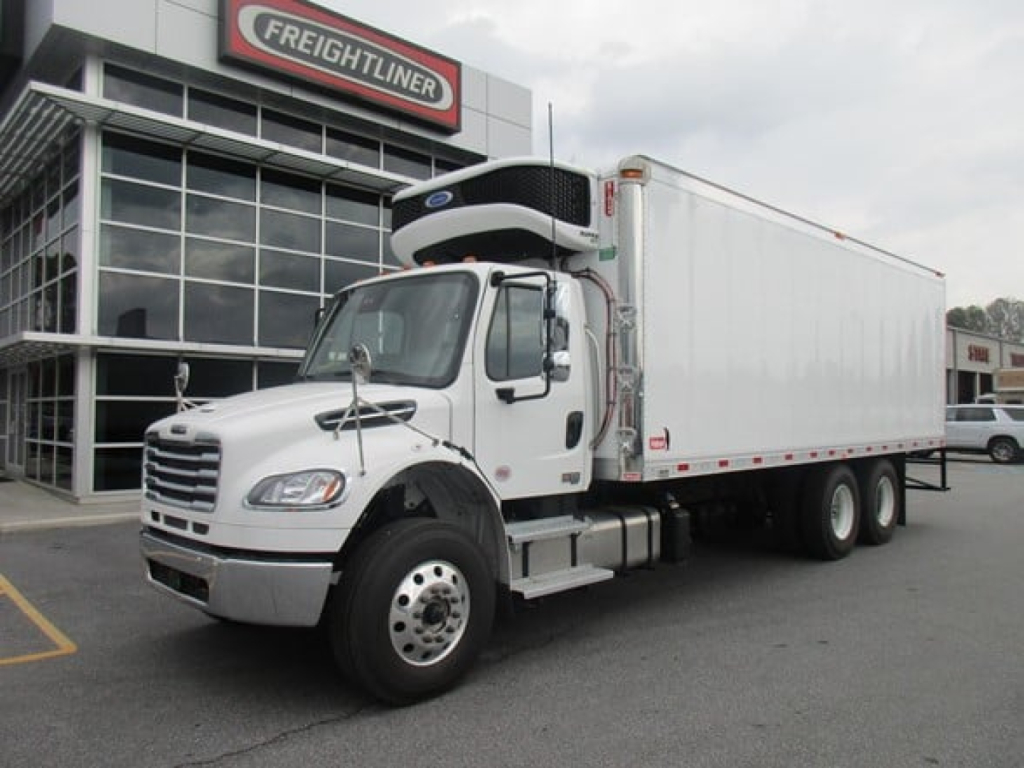
Browse Freightliner refrigerated trucks with reefer bodies, liftgates, and medium-duty specs for cold-chain delivery and route work.
Learn more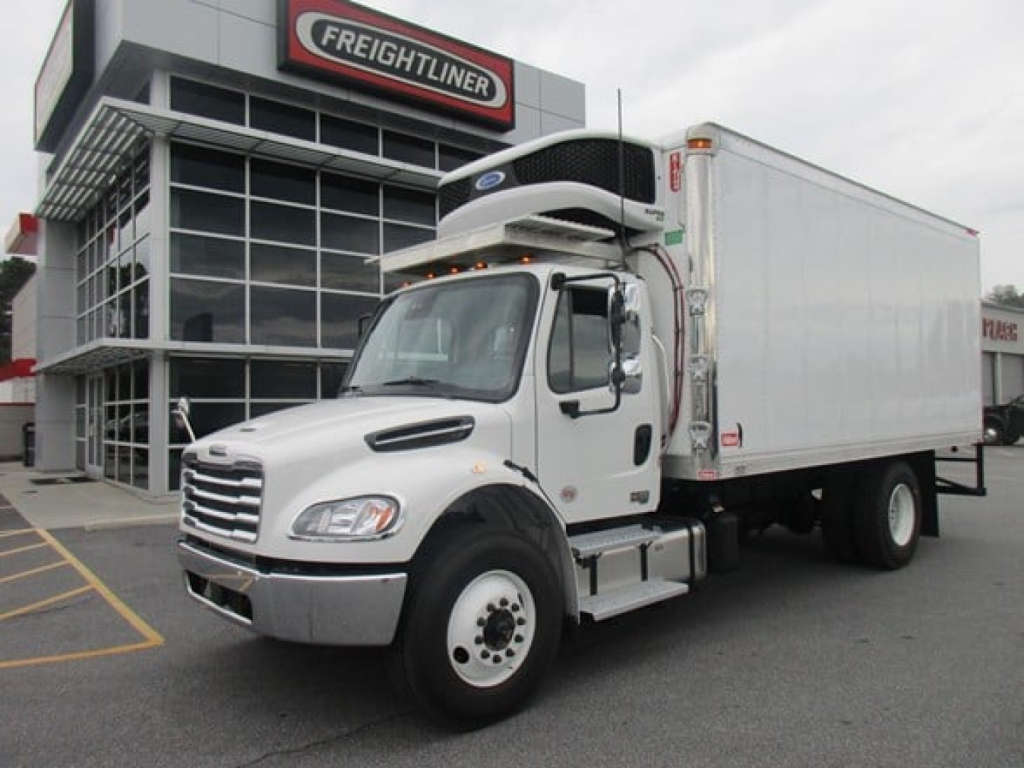

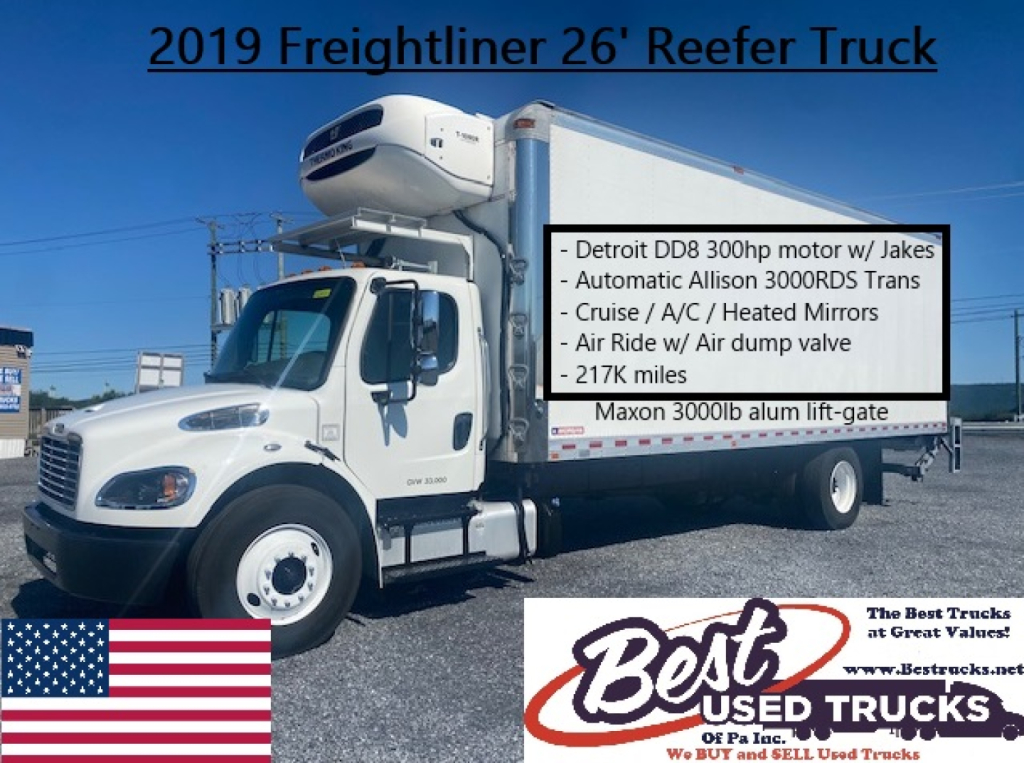
Have freightliner refrigerated truck to sell? List it here to reach thousands of buyers.
About Freightliner Refrigerated Trucks
The reefer body and refrigeration unit deserve as much attention as the chassis. Common body builders include Morgan and Kidron, and many trucks in this class carry Thermo King units such as T-880R or similar truck-mounted systems. Buyers should verify box length, wall thickness, floor type, and airflow design because those details affect pull-down time, temperature recovery, and sanitation. Heavy-duty aluminum duct floors, flat floors, scuff liners, stainless door frames, and curbside doors are all common features in local delivery service. A rear ramp or liftgate can be a major value point depending on dock access, hand-unload requirements, and palletized freight.
Freightliner M2 refrigerated trucks are often found in GVWR ranges from 26,000 to 33,000 pounds, so CDL and non-CDL considerations can change from one truck to the next. A 26,000-pound GVWR truck may fit non-CDL operations in some applications, while 33,000-pound specs offer more legal payload but usually require a CDL. Rear axle ratings around 17,500 to 21,000 pounds, wheelbases near 259 to 270 inches, and rear ratios in the mid-4s to high-5s are common in this segment. Suspension choice also matters. Spring suspension is simple and durable, while air ride can improve ride quality for sensitive cargo and reduce shock through the body.
Condition evaluation on a used Freightliner reefer truck should go beyond miles and engine hours. Refrigeration unit hours, maintenance history, door seal condition, evaporator performance, fuel system setup, and evidence of prior floor or wall repair all matter. Confirm the unit can hold the required temperature under load, not just empty at idle. Check for proper operation of standby if equipped, verify liftgate capacity if installed, and inspect the box interior for corrosion, delamination, and damage around the rear frame and threshold. For buyers comparing multiple Freightliner refrigerated trucks for sale, the best value usually comes from matching reefer performance, body spec, and GVWR to the route, not just choosing the newest chassis.
Frequently Asked Questions
What are the most common Freightliner refrigerated truck models?
The most common Freightliner refrigerated trucks are medium-duty straight trucks built on the M2 and M2 106 chassis. These are popular because they balance maneuverability, serviceability, and body compatibility for 20-foot to 26-foot reefer boxes. Most are spec'd for local and regional delivery with automatic transmissions, single axles, and diesel engines in the mid-horsepower range.
What should I check first on a used reefer truck?
Start with the refrigeration system, not just the truck chassis. Confirm the reefer unit starts cleanly, reaches set temperature, cycles correctly, and holds temperature under actual operating conditions. Then inspect reefer hours, service records, box insulation condition, door seals, floor wear, and any liftgate or ramp equipment. A sound engine and transmission are important, but reefer repairs and body problems can be just as expensive.
Is a Freightliner refrigerated truck usually CDL or non-CDL?
It depends on the truck's GVWR. Many refrigerated box trucks are spec'd at 26,000 pounds GVWR to fit non-CDL operation in many jurisdictions, while others are built at 33,000 pounds GVWR for higher payload capacity and require a CDL. Buyers should confirm the door sticker, registration class, and intended payload before making a decision because a similar-looking truck can fall on either side of the CDL threshold.
Which reefer body features matter most for delivery work?
Floor construction, side access, rear access, and cargo protection features usually matter most. Heavy-duty aluminum duct floors help airflow and durability, scuff liners protect the walls, and stainless rear frames hold up better in repeated dock contact. A curbside door improves stop efficiency, while a liftgate or ramp is critical for locations without dock access. The right body spec depends on product type, pallet count, and stop frequency.
Are Freightliner M2 reefer trucks good for city delivery routes?
Yes. Freightliner M2 reefer trucks are widely used in city and suburban route work because they offer a tight enough package for frequent stops while still supporting full-size refrigerated bodies. Automatic transmissions, good visibility, and common parts availability make them a practical platform for food, beverage, and cold-chain delivery fleets. The key is matching wheelbase, box length, and GVWR to the route density and loading conditions.