
Dump Trucks For Sale in California
California dump trucks for sale, including single-axle, tandem, tri-axle, and quad-axle models for construction, aggregate, and site work.
Learn moreBrowse Dump Trucks by Make
Have dump truck to sell? List it here to reach thousands of buyers.
About Dump Trucks in California
A buyer comparing used dump trucks should pay close attention to frame rail condition, hoist performance, PTO operation, and the type of body installed. Steel bodies are common on demolition, rock, and asphalt applications because they handle impact and abrasion better, especially when paired with heavier floors and reinforced sides. Aluminum bodies save weight and can improve legal payload on bulk materials, but they are less common where severe loading conditions are routine. Double frames, lift axles, locking differentials, and full locking rears are important features on trucks that regularly leave pavement or haul heavy material. On California trucks, it also makes sense to review emissions equipment condition carefully, especially on mid-2000s and newer diesel models with EGR, DPF, and DEF systems.
Spec details change the way a dump truck earns money day to day. Wheelbase affects turning radius and body length, while suspension choice influences ride quality, durability, and stability under load. Camelback and heavy vocational suspensions remain common on severe-service trucks, while air ride can improve comfort and chassis protection in mixed on-road work. Front axle capacity, rear ratio, and transmission gearing should match the terrain and haul distance. A local site truck running short cycles in urban areas may benefit from an automatic transmission and tighter wheelbase, while a truck pulling grades with full loads may need a manual or automated manual paired with a deeper rear ratio. Buyers should also check tailgate style, tarp system, pintle or hitch equipment, and any evidence of hard use around the hinge points, crossmembers, and body mounts.
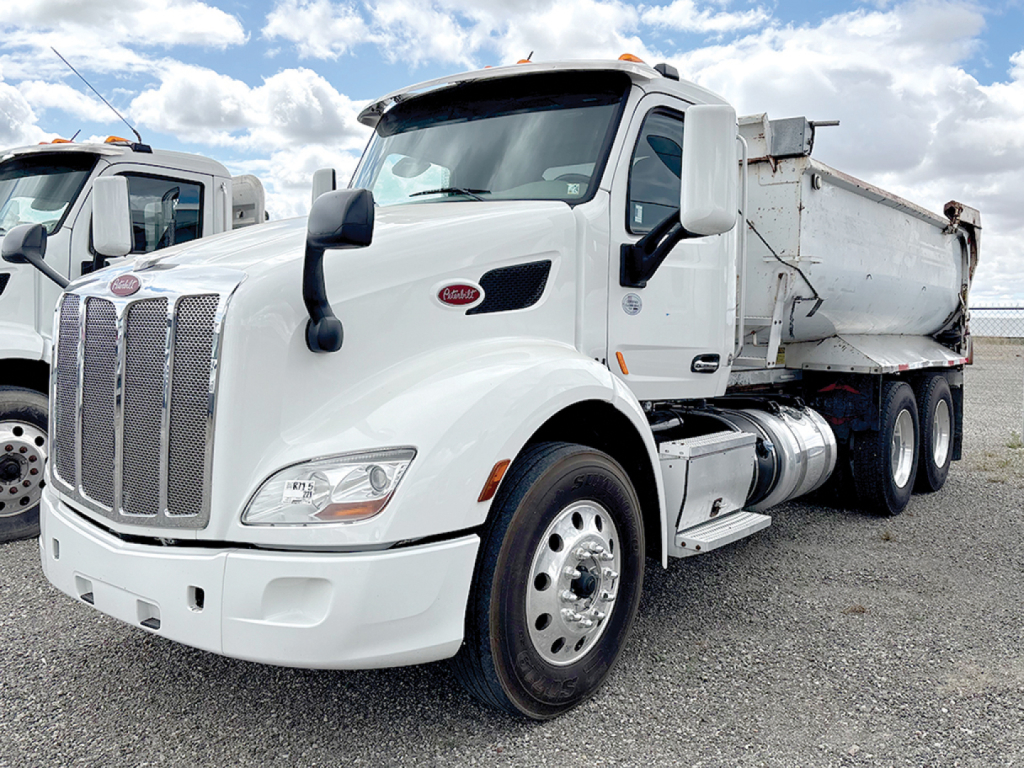
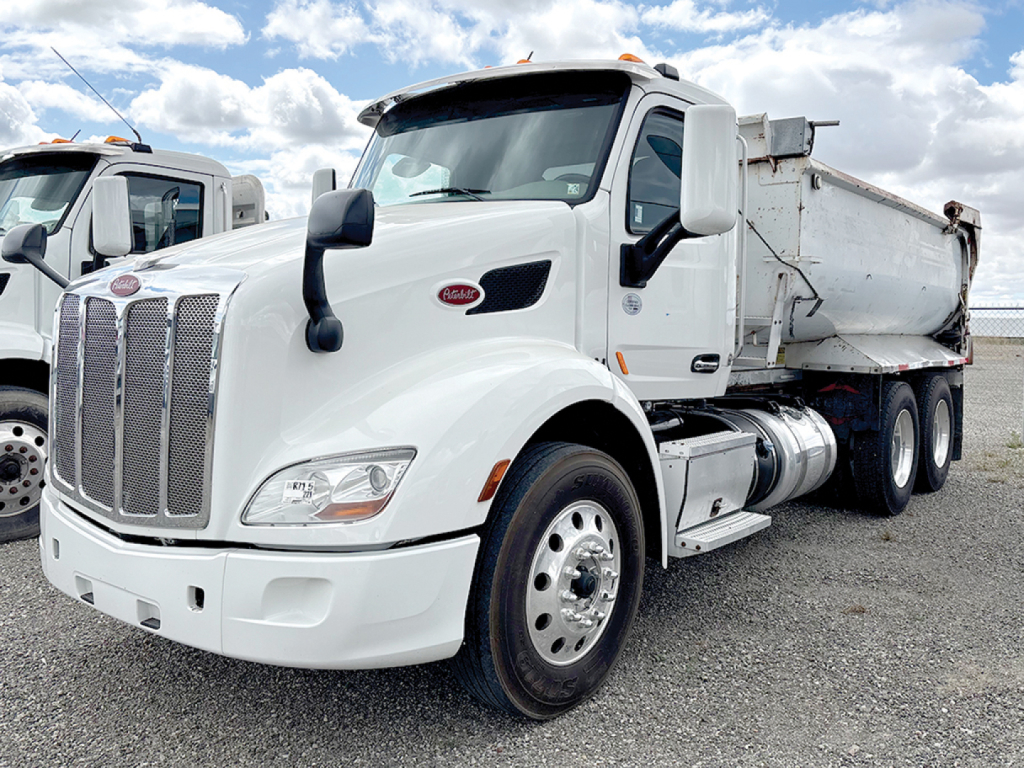
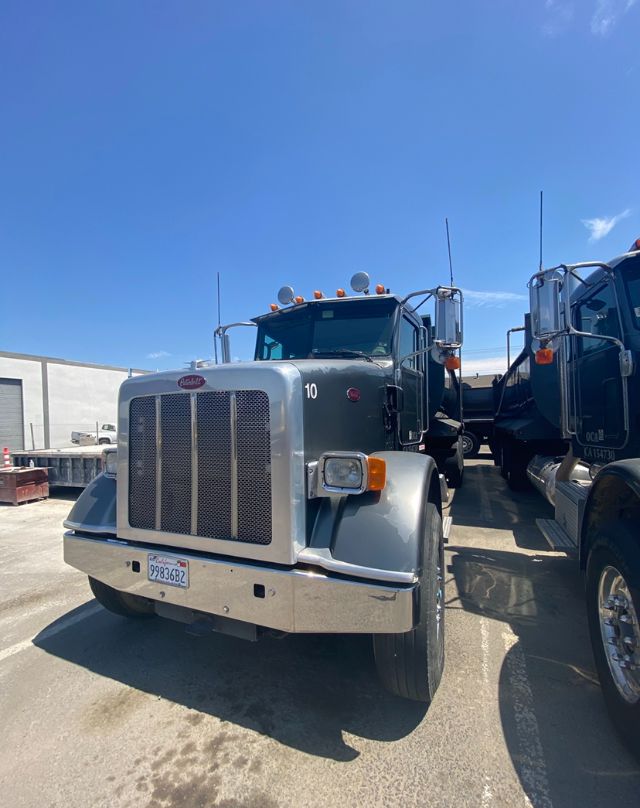
The category includes everything from compact Ford F-550 style contractor dumps to heavier Sterling, Peterbilt, Kenworth, Mack, Western Star, and Freightliner vocational units. Some are spec'd as straight dump trucks, while others are set up as transfer dumps, dump trucks with pup trailer capability, or demolition trucks with heavier boxes and liner packages. The best choice depends on material type, average haul distance, legal weight needs, and how much maneuverability the work requires. A well-matched dump truck should load cleanly, raise smoothly, track straight under payload, and have enough frame, axle, and brake capacity to handle repeated cycles without becoming a maintenance-heavy truck.
Frequently Asked Questions
What is the difference between a contractor dump truck and a heavy vocational dump truck?
A contractor dump truck is usually a lighter Class 5-6 or lighter Class 7 chassis with a smaller body, lower GVWR, and better maneuverability for landscaping, utility, and general construction work. A heavy vocational dump truck typically uses a tandem, tri-axle, or quad-axle configuration with a heavier frame, larger hoist, and higher axle capacities for aggregate, demolition, asphalt, and excavation. The heavier truck carries more material, but it also comes with higher operating costs and may be less practical on tight residential or urban jobs.
Are steel or aluminum dump bodies better?
Steel dump bodies are generally better for abrasive or high-impact material such as rock, broken concrete, demolition debris, and hot asphalt. They resist damage better and are easier to spec for severe-duty work with thicker floors and side reinforcements. Aluminum bodies reduce tare weight and can improve payload on lighter bulk commodities, but they are less forgiving in punishing applications. The right choice depends on what the truck hauls most often, not just on body weight alone.
What should I inspect first on a used dump truck?
Start with the frame, hoist, PTO, and body condition because those components tell you how the truck has actually been worked. Look for cracked frame sections, poor weld repairs, elongated body mount holes, hinge wear, leaking cylinders, and uneven lift operation. Then review axle ratings, suspension condition, brake life, tire wear, and driveline operation under load if possible. On diesel trucks, especially emissions-era models, fault codes, regeneration history, and the condition of DPF and DEF systems can be as important as engine hours or odometer miles.
Which axle configuration is best for a dump truck in California?
The best axle configuration depends on payload target, material type, and the roads and jobsites the truck will see. Single-axle dump trucks work well for lighter loads, municipal work, and tighter access. Tandem axles are the standard choice for many construction and aggregate applications because they balance capacity, durability, and maneuverability. Tri-axle and quad-axle trucks can increase legal payload and spread weight better, but they add complexity, tire cost, and turning limitations. California weight laws and bridge formula considerations should always be reviewed before choosing by body size alone.
Is an automatic transmission a good choice in a dump truck?
An automatic can be a strong fit for stop-and-go hauling, urban routes, municipal service, and operations with multiple drivers because it reduces driver fatigue and simplifies operation. It can also help in jobs with frequent starts, backing, and short-cycle work. Manual and automated manual transmissions still appeal in heavier vocational use where gearing control, grade work, and long-term service preferences matter. The best transmission choice depends on driver experience, terrain, and the truck's daily duty cycle.