
Clark Lifts - Fork For Sale
Browse Clark fork lifts and heavy-duty forklift equipment with diesel power, strong lift capacities, and durable designs for yard and material handling.
Learn more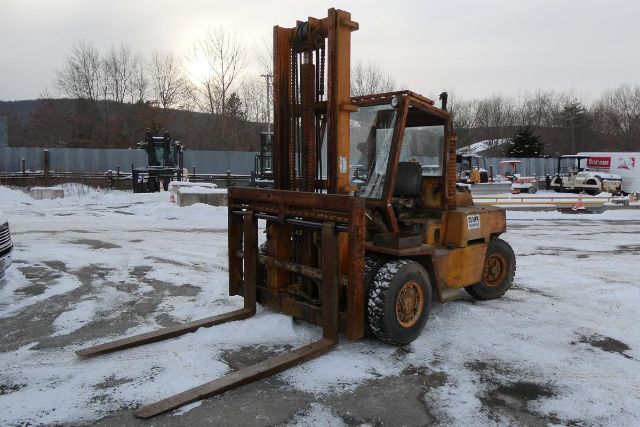
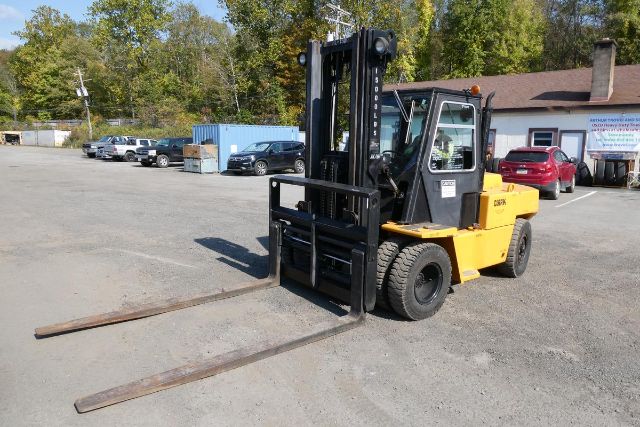
Have clark lifts - fork trucking equipment to sell? List it here to reach thousands of buyers.
About Clark Lifts - Fork
The first buying decision is usually capacity and lift height. Clark fork trucks in this class can range from mid-capacity warehouse-oriented machines up to heavier outdoor units rated around 9,000 to 15,000 pounds or more. Buyers should compare rated capacity at the actual load center, not just the headline number on the data plate. Mast configuration also matters. A tri-mast gives more lift height with a lower collapsed height for transport or clearance, while a simpler mast may be easier to maintain. Fork length, fork thickness, carriage width, and the presence of side shift or hydraulic fork positioners all directly affect how efficiently the machine handles different freight types.
Powertrain and tire setup should match the jobsite. Many older Clark forklifts use diesel engines such as Perkins mechanical diesels, which are valued for simple fuel systems and broad parts familiarity. Automatic transmissions with forward and reverse shuttle operation are common in yard applications where repetitive directional changes are part of the work cycle. Pneumatic tires are better suited for rougher outdoor surfaces, gravel lots, and mixed-use yards, while cushion-tire forklifts are generally more appropriate for smooth indoor floors. On larger units, overall machine weight, turning radius, mast height, and overhead guard or cab height need to be checked carefully against the space where the forklift will actually work.
Condition matters more than age on a used Clark fork truck. Buyers should inspect mast channels, lift chains, tilt cylinders, steer axle wear, brake performance, transmission engagement, and hydraulic response under load. Dry cylinders, tight pins, even tire wear, and smooth mast operation usually tell you more than the paint. If the forklift will support trucking operations, pay close attention to fork wear, carriage function, side shift operation, and visibility from the operator position when approaching trailers or stacked freight. A well-matched Clark forklift can be a dependable yard machine for loading, unloading, and material movement without the complexity of more specialized lift equipment.
Frequently Asked Questions
What should I look for first when buying a used Clark fork lift?
Start with rated capacity, mast type, and overall condition. The rated capacity must match the weight and load center of the material you actually handle, especially if loads are long, uneven, or carried on extended forks. After that, inspect the mast, chains, carriage, hydraulics, brakes, steering, and transmission. On older diesel Clark forklifts, service history and evidence of consistent maintenance are often more important than model year alone.
Are Clark forklifts good for outdoor trucking yard use?
Many Clark fork trucks are well suited for outdoor yard work, especially larger diesel units equipped with pneumatic tires. These machines are commonly used to load trailers, handle machinery, move palletized freight, and support flatbed or open-deck operations. Buyers should confirm ground conditions, required lift height, turning space, and whether an enclosed cab is needed for weather exposure and operator comfort.
How important are side shift and fork positioners on a heavy forklift?
Side shift is a major productivity feature because it allows the operator to make small lateral corrections without repositioning the entire machine. Hydraulic fork positioners add another level of efficiency when handling loads of different widths, such as pallets, bundled material, or irregular freight. In trucking and yard applications, these options can reduce load handling time, improve placement accuracy, and help limit damage to freight and trailers.
What is the difference between a standard mast and a tri-mast on a Clark fork truck?
A standard mast is simpler and can be a solid choice for lower lift applications with fewer moving sections. A tri-mast, also called a triple-stage mast, gives more vertical reach while maintaining a lower collapsed height, which can be important for clearing doors, trailers, or building openings. The right choice depends on the maximum stacking height required and the clearance limitations in your yard or facility.
Do older diesel Clark forklifts still make sense for buyers today?
They can, especially for buyers who want a straightforward machine for occasional to moderate yard use. Older diesel Clark models often appeal to owners who prefer mechanical engines, simpler controls, and easier field service. The key is to evaluate wear items and operating condition carefully. A solid older unit with good hydraulics, strong brakes, and a healthy drivetrain can still be a cost-effective forklift for trucking and material handling operations.